What A Dart Machine Price
Views: 3 Update date: Apr 27,2026

What does a Dart Machine Cost for FEC

By UA Entertainments Team | Published: April 27, 2026 | Reading Time: 13 minutes


Quick Answer: Why Dart Machines Range From $800 to $12,000

If you've shopped for arcade dart machines, you've probably noticed something confusing: two machines that look almost identical can have price tags ranging from $800 to $12,000. What accounts for that $11,200 gap?

The answer isn't brand markup or "import tax." It comes down to 7 specific quality factors that affect durability, player experience, and total cost of ownership.

Here's the short version:

Quality FactorBudget Machine (<$2,000)Mid-Range ($2,000-$6,000)Premium ($6,000-$12,000)
Dart Sensor Accuracy±3-5mm±1-2mm±0.5mm
Display TypeBasic LED (red only)Full-color LCDLarge touchscreen
Cabinet MaterialPlastic shell, thin metalReinforced metalCommercial-grade steel
Game Variations10-1520-3030+
Expected Lifespan3-5 years6-8 years8-12 years
Warranty6-12 months12-24 months24-36 months
5-Year Total Cost$2,800-$4,200$2,400-$6,800$6,800-$13,000

The real question isn't "which machine is cheapest." It's "which machine costs the least per year of reliable operation." This guide breaks down every quality factor that drives price differences so you can make an informed decision.


📋 Quick Navigation


1. The Price-Quality Paradox in Arcade Dart Machines

Here's a scenario that plays out in FECs worldwide:

Operator A buys the cheapest dart machine available — $900 from an unknown supplier. Six months later, the sensors start misreading throws. After 14 months, the display flickers and dies. By month 18, spare parts are unavailable. Total cost over 3 years: $3,200 (2 replacements + downtime losses).

Operator B buys a mid-range machine — $4,500 from an established manufacturer. The machine runs flawlessly for 8 years. Total cost over 8 years: $5,200 (machine + $700 in maintenance).

Operator B spent $2,000 less over the lifespan of the machine — and their players never complain about broken equipment.

This is the price-quality paradox: the cheapest machine is almost always the most expensive one over time.

In this guide, we'll break down exactly what you're paying for at each price tier, so you can identify where quality matters and where you're just paying for marketing.


2. Dart Sensor Technology: The #1 Quality Differentiator

The dart sensor is the heart of any electronic dart machine. It's the component that detects where your dart hits and translates that into a score. Sensor quality is the single biggest factor driving price differences.

2.1 How Dart Sensors Work

Electronic soft-tip dart machines use a grid of sensors behind the dartboard surface. When a dart with a plastic tip lands in the board, it presses against the sensor grid. The machine's processor reads the X-Y coordinates of the impact and calculates the score based on the game rules.

The quality of this system depends on three factors:

FactorWhat It MeansImpact on Player Experience
AccuracyHow precisely the sensor detects dart positionMisreads = disputed scores = frustrated players
Response TimeHow quickly the score updates after a throwLag = broken flow = less enjoyable gameplay
DurabilityHow many dart impacts the sensor can handle before degradingDegradation = increasingly inaccurate scoring over time

2.2 Sensor Quality by Price Tier

Price TierSensor TypeAccuracyResponse TimeDurability (throws)
Budget (<$2,000)Basic contact grid±3-5mm200-500ms50,000-100,000
Mid-Range ($2,000-$6,000)Multi-layer grid±1-2mm100-200ms200,000-500,000
Premium ($6,000-$12,000)Advanced multi-layer + calibration±0.5mm50-100ms500,000-1,000,000+

What this means in practice:

  • A budget machine with ±5mm accuracy will occasionally misread a "double 20" as "single 20." Players notice. Complaints follow.

  • A mid-range machine with ±2mm accuracy is reliable for casual play and most tournament scenarios.

  • A premium machine with ±0.5mm accuracy is tournament-grade — used in professional soft-tip dart competitions.

2.3 The Cost of Poor Sensors

Poor sensor quality doesn't just frustrate players — it costs money:

Cost TypePer IncidentAnnual Impact (1 Machine)
Score dispute resolution5-10 min staff time$200-400
Player refund due to misread$2-5 per incident$300-600
Machine downtime for repair1-3 days$500-1,500 (lost revenue)
Early replacement (year 2-3)$800-2,000$800-2,000
Total Annual Cost
$1,800-4,500

Bottom line: Investing in better sensor quality upfront saves $1,800-4,500 per machine per year in hidden costs.


3. Display Quality: LED vs LCD vs Touchscreen

The display is the second biggest price driver. It's also the most visible quality difference — players interact with the display on every throw.

3.1 Display Types Compared

Display TypeDescriptionTypical Price RangeBest For
Single-color LEDRed or green LED segments, basic numbers$0-200 (built into budget machines)Low-traffic venues, home use
Multi-color LEDRed/green/yellow LED matrix, basic graphics$200-500 (mid-range machines)Standard FECs, moderate traffic
LCD PanelFull-color LCD screen, dynamic graphics$500-1,000 (mid-to-premium)High-traffic FECs, tournaments
TouchscreenInteractive touchscreen, player-controlled menus$800-2,000 (premium machines)Premium venues, self-service operation

3.2 Why Display Quality Matters Beyond Looks

A good display isn't just about aesthetics. It affects:

  • Spectator engagement — Players at a dart machine attract bystanders. A bright, dynamic display draws more attention than a dim LED panel. More spectators = more new players.

  • Game speed — Touchscreen interfaces let players navigate menus without staff assistance. This reduces wait times and increases plays per hour.

  • Maintenance — LCD and touchscreen displays have fewer moving parts than LED matrix panels, which can develop dead segments over time.

  • Branding opportunities — Full-color displays can show custom graphics, tournament logos, and venue branding between games.

3.3 UA Entertainments Display Standards

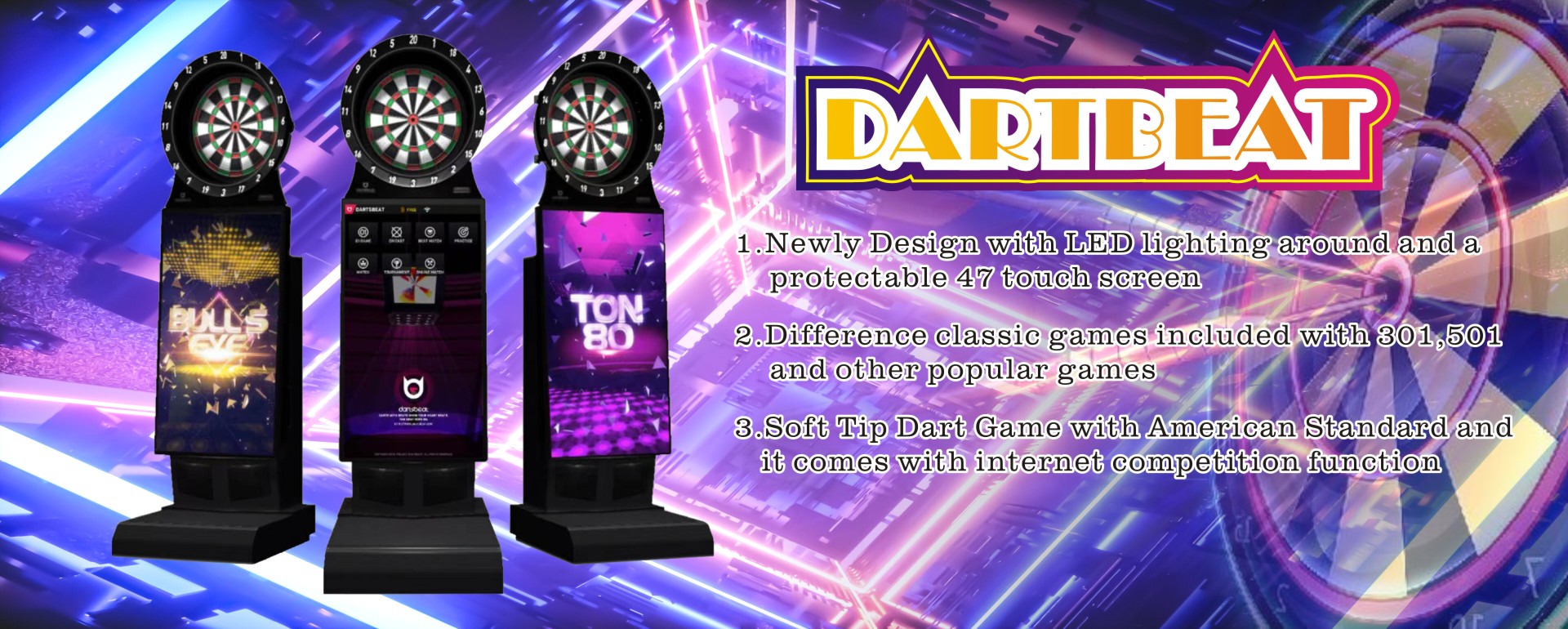
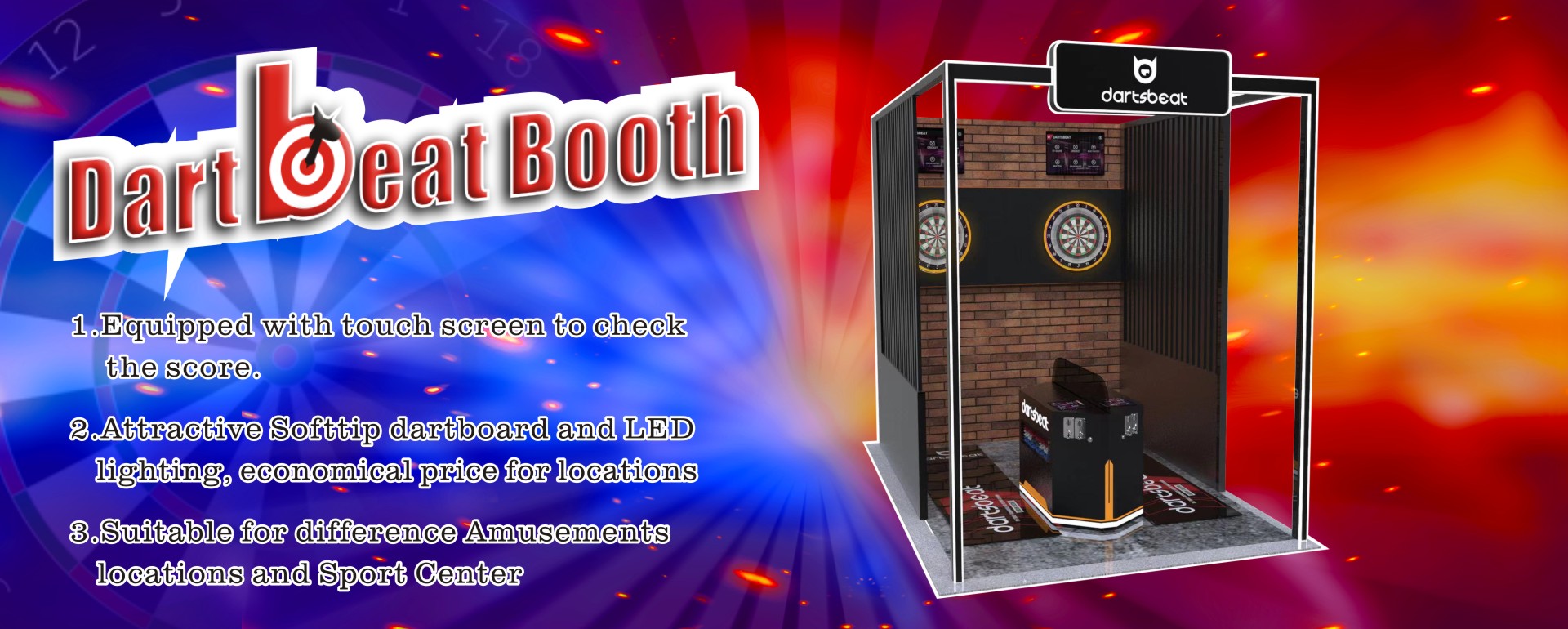
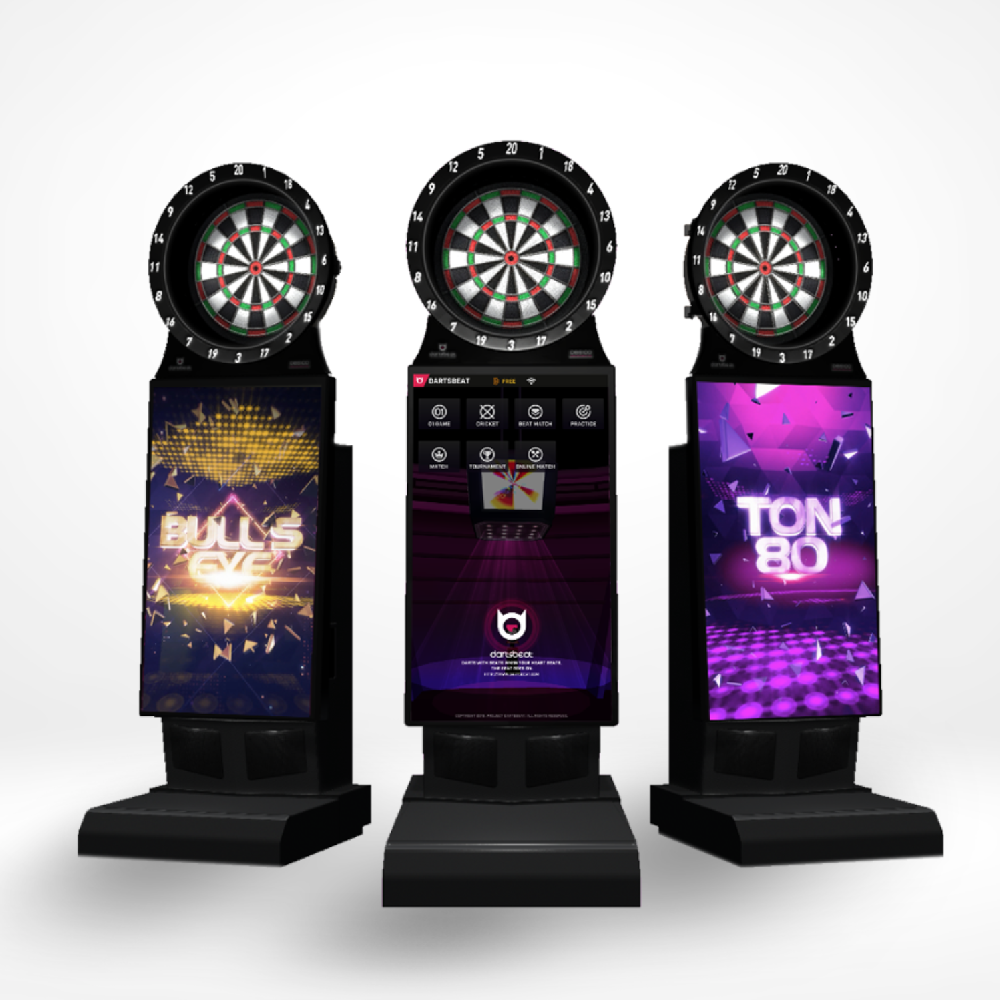
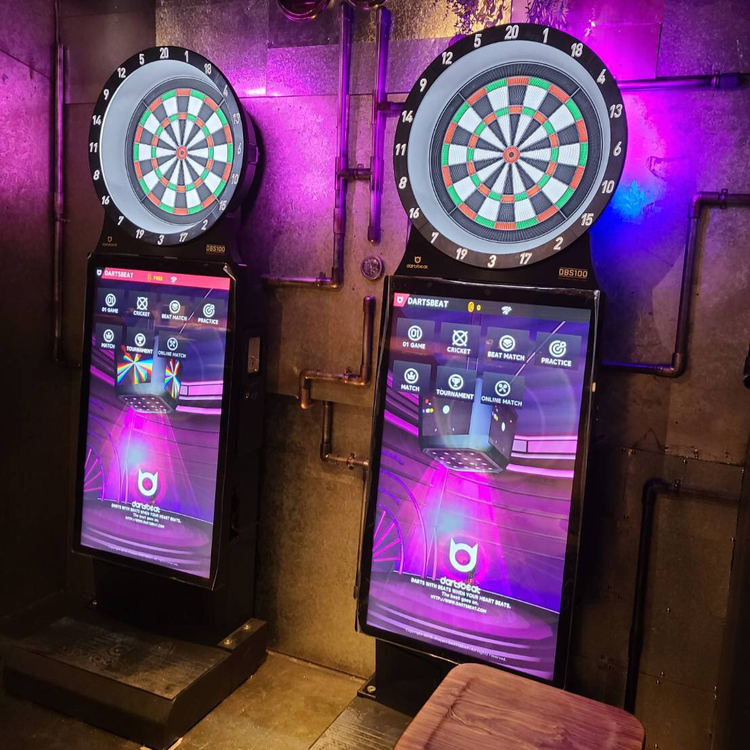
The Dartbeat features a bright LED scoring display designed for visibility from across the venue. The Dartbeat Booth upgrades to a touchscreen interface with full player-controlled navigation — ideal for FECs that want self-service tournament operation.


4. Cabinet Construction: Plastic vs Metal vs Steel

The cabinet is the machine's skeleton. It determines how well the machine withstands years of commercial use — including the occasional enthusiastic player who leans too hard or bumps the machine during a match.

4.1 Cabinet Materials by Tier

MaterialThicknessDurabilityWeightTypical Use
ABS Plastic2-3mmLow — cracks under impact15-25 kgHome machines, light commercial
Plastic + Metal Frame3mm plastic, 1mm frameMedium — frame prevents collapse25-40 kgLight FEC use
Reinforced Metal1-1.5mm steelHigh — withstands commercial use40-60 kgStandard FEC, tournament use
Commercial Steel1.5-2mm powder-coated steelVery high — built for 8+ years60-80 kgHeavy FEC, league play

4.2 What to Look For in Cabinet Quality

Quality CheckBudget MachineQuality Machine
Joint constructionPlastic clips, screws onlyWelded joints + screws
Surface finishPainted plastic (scratches easily)Powder-coated steel (scratch-resistant)
Access panelsDifficult to open, no hingesHinged panels with locks
Cable managementExposed wires, messy routingOrganized cable channels, strain relief
Foot stabilityPlastic feet, wobbles on uneven floorsAdjustable metal feet, rubber pads

4.3 The Weight Test

A simple way to assess cabinet quality: lift the machine.

  • Under 25 kg = likely plastic construction, not suitable for heavy commercial use

  • 25-40 kg = mixed construction, acceptable for moderate use

  • 40-60 kg = reinforced metal, good for FEC use

  • 60+ kg = commercial-grade steel, built for tournament-level abuse

Why weight matters: Heavier machines don't shift when players lean on them during matches. They also dampen vibration from dart impacts, which improves sensor accuracy over time.


5. Software and Game Variations: More Than Just Numbers

When manufacturers advertise "30+ game variations," it sounds impressive. But the number of games matters less than the quality of the software running them.

5.1 What Makes Good Dart Machine Software?

Software Quality FactorWhat to Look ForWhy It Matters
Game selectionMust include 301, 501, 701, Cricket, Double-OutThese are the games players actually want
Rules accuracyCompliant with American Standard / World Darts Federation rulesTournament play requires certified rules
Scoring speedScore updates within 100ms of dart impactLag breaks player flow
Multiplayer handlingSeamless switching between 2-8 playersCritical for tournament operation
Tournament modeBracket management, round trackingSaves hours of manual work
Language supportMultiple languages (for international venues)Important for tourist destinations
Firmware updatesRemote update capabilityKeeps software current without shipping machines back

5.2 Game Variations: Quality Over Quantity

A machine with 15 well-implemented games is better than a machine with 30 games where half are unusable. Here's the minimum game set every FEC dart machine should have:

GamePlayersDescriptionTournament Use
3011-4Start at 301, count down to zeroQuick matches, warm-up
5011-4Start at 501, count down to zeroStandard tournament game
7011-4Start at 701, count down to zeroExtended matches, championships
Cricket1-6Close numbers 15-20, then bullMost popular casual game
Double-Out1-4Must finish on a doubleTournament standard
Halve-It1-4Score decreases each roundFun variation

Pro tip: Ask the supplier to demonstrate the tournament mode before purchasing. If the interface is confusing or the bracket management is clunky, that's a software quality issue.


6. Payment Systems: Coin, Card, or Integrated?

The payment system is often overlooked in quality assessments, but it's the component that directly affects revenue. A broken payment system means free plays — and free plays add up fast.

6.1 Payment System Types

TypeCostProsConsBest For
Coin mechanism$50-150Simple, reliable, no software neededOnly accepts coins, jams frequentlyLow-budget setups
Bill validator$100-300Accepts bills + coinsLarger unit, requires more maintenanceStandard FECs
Card reader$200-500Cashless, tracks play dataRequires network connectionModern FECs
Integrated payment$500-1,500Built into machine, seamlessHigher upfront costPremium venues

6.2 The Cashless Revenue Boost

According to the National Recreation and Park Association (NRPA), FECs that switch from coin-only to cashless payment systems see a 25% increase in per-player spending. Here's why:

  • Players don't carry coins anymore — cashless removes the friction of "I need to get change"

  • Cashless systems enable loyalty programs ("play 10, get 1 free")

  • Cashless systems provide play data that helps operators optimize pricing

For FEC operators: If you're buying new dart machines in 2026, invest in cashless payment capability. The $200-500 upfront cost pays for itself within 2-3 months through increased play volume.


7. Certification and Compliance: CE, RoHS, and What They Actually Mean

When a manufacturer says their dart machine is "CE certified" or "RoHS compliant," what does that actually mean — and why should you care?

7.1 CE Marking

What it means: The machine meets European Union safety, health, and environmental protection requirements. It's been tested for electrical safety, electromagnetic compatibility (EMC), and mechanical safety.

Why it matters:

  • CE marking means the machine won't shock players (electrical safety)

  • It won't interfere with other electronic equipment (EMC)

  • It has passed mechanical safety tests (no sharp edges, stable construction)

Red flag: Some manufacturers claim "CE certified" without actual testing. Ask for the CE test report — a legitimate manufacturer will have documentation from an accredited testing lab.

7.2 RoHS Compliance

What it means: The machine doesn't contain restricted hazardous substances (lead, mercury, cadmium, hexavalent chromium, PBB, PBDE).

Why it matters:

  • RoHS compliance means the machine is safer for players (no toxic exposure)

  • It's required for sale in the EU and many other markets

  • It indicates the manufacturer uses quality components (cheap components often contain restricted substances)

7.3 Other Certifications to Look For

CertificationWhat It CoversRequired For
FCCElectromagnetic interference (US)Required for sale in the United States
ULElectrical safety (US)Voluntary but recommended
ETLElectrical safety (US alternative to UL)Voluntary but widely accepted
SAAElectrical safety (Australia)Required for sale in Australia
PSEElectrical safety (Japan)Required for sale in Japan

UA Entertainments standard: All Dartbeat and Dartbeat Booth machines carry CE and RoHS certification as standard, ensuring compliance for sale and operation in Europe, the Middle East, Asia, and most international markets.


8. Total Cost of Ownership: The 5-Year Calculation

The purchase price is just the beginning. Here's a realistic 5-year total cost of ownership (TCO) calculation for each quality tier.

8.1 TCO Breakdown

Cost CategoryBudget (<$2,000)Mid-Range ($2,000-$6,000)Premium ($6,000-$12,000)
Purchase price$1,200$4,000$8,000
Shipping$300$400$500
Installation$0 (self)$200$300
Electricity (5 years)$250$400$500
Dart tip replacement (5 years)$150$200$250
Maintenance/repairs (5 years)$600$300$200
Component replacement (display/sensors)$400 (year 3)$0$0
Early replacement (year 4)$1,200$0$0
Lost revenue from downtime$800$200$100
5-Year Total$4,900$5,700$9,850

8.2 Cost Per Year of Operation

Tier5-Year TotalExpected LifespanCost Per Year
Budget$4,9004 years (requires replacement)$1,225
Mid-Range$5,7008 years$713
Premium$9,85012 years$821

The winner: Mid-range machines offer the lowest cost per year at $713 — 42% cheaper per year than budget machines, and 13% cheaper than premium machines.

This is why we recommend mid-range machines for most FECs. You get commercial-grade quality without the premium price tag, and the total cost of ownership is the lowest.


9. Red Flags: How to Spot a Low-Quality Dart Machine

When evaluating dart machines from any supplier, watch for these warning signs:

9.1 Price Red Flags

Red FlagWhat It Means
Price under $800 for a "commercial" machineLikely plastic construction, not suitable for FEC use
Price significantly below market averageEither a scam or the machine is missing key components
No itemized quote (just one lump sum)Supplier may be hiding costs or using low-quality components

9.2 Quality Red Flags

Red FlagWhat It Means
No CE/RoHS certificationMachine hasn't been safety-tested
"100+ game variations" for under $2,000Software is likely buggy or games are poorly implemented
No warranty or "30-day guarantee" onlySupplier doesn't stand behind their product
No spare parts availabilityMachine will be unrepairable within 1-2 years
No demonstration video or live demoSupplier may not have actually tested the machine

9.3 Supplier Red Flags

Red FlagWhat It Means
No physical address or factory photosMay be a reseller, not a manufacturer
Refuses to provide customer referencesNo track record to show
Pressure to pay upfront with no contractUnprofessional business practices
No after-sales support contact infoYou're on your own if something goes wrong

10. Price-Quality Matrix: Which Tier Is Right for You?

Not every FEC needs premium machines. Here's a practical framework for choosing the right quality tier based on your venue type and usage.

10.1 Decision Matrix

Your SituationRecommended TierPrice RangeWhy
Small FEC (<5,000 sq ft), 1-2 machinesMid-Range$2,000-$4,000Best value, lowest TCO
Medium FEC (5,000-15,000 sq ft), 3-6 machinesMid-Range to Premium$3,000-$6,000Balance of quality and budget
Large FEC (15,000+ sq ft), 6+ machinesPremium$6,000-$10,000Tournament-ready, highest durability
Bowling alley / bar side attractionMid-Range$2,000-$4,000Good enough for moderate use
Home use / light commercialBudget to Mid-Range$1,000-$3,000Lower usage doesn't justify premium
Tournament venue / dart centerPremium$8,000-$12,000Tournament-grade accuracy required

10.2 The Sweet Spot: Mid-Range Machines

For 70% of FEC operators, mid-range machines ($2,000-$6,000) offer the best combination of:

  • ✅ Commercial-grade durability (metal cabinet, reinforced construction)

  • ✅ Accurate sensors (±1-2mm, suitable for casual and tournament play)

  • ✅ Full-color display (LCD or multi-color LED)

  • ✅ 20-30+ game variations

  • ✅ 12-24 month warranty

  • ✅ Lowest total cost of ownership ($713/year)

UA Entertainments' Dartbeat sits squarely in this sweet spot. At a competitive mid-range price point, it delivers:

  • 30+ game variations

  • LED scoring display with venue-wide visibility

  • American Standard rules compliance

  • 4-6 player multiplayer support

  • Commercial-grade construction

  • CE/RoHS certification

  • 1-2 year warranty

For FEC operators who want the premium experience, the Dartbeat Booth adds a touchscreen interface, standalone booth design, and head-to-head competition mode — ideal for high-visibility tournament matches.


11. Frequently Asked Questions

What is the most important quality factor in an arcade dart machine?

Dart sensor accuracy is the #1 quality factor. Poor sensors cause misread scores, player disputes, and machine downtime. A machine with accurate sensors (±1-2mm or better) will cost more upfront but save $1,800-4,500 per year in hidden costs like refunds, repairs, and lost revenue.

How much should I budget for a quality arcade dart machine for my FEC?

For a commercial-grade dart machine suitable for FEC use, budget $2,000-$6,000 per machine. This gets you metal cabinet construction, accurate sensors, a full-color display, 20-30+ game variations, and a 12-24 month warranty. Budget machines under $1,000 are not suitable for commercial FEC use.

How long does a commercial dart machine last?

Quality TierExpected Lifespan
Budget (<$2,000)3-5 years
Mid-Range ($2,000-$6,000)6-8 years
Premium ($6,000-$12,000)8-12 years

The lifespan depends on usage intensity, maintenance quality, and environmental factors (humidity, temperature, dust).

Is it worth paying more for a touchscreen dart machine?

For FECs with 4+ machines: Yes. Touchscreens enable self-service operation, reduce staff workload, and provide a more engaging player experience. The $800-2,000 premium typically pays for itself within 6-12 months through increased play volume.

For FECs with 1-2 machines: Not necessarily. A good LED display is sufficient for smaller setups. Upgrade to touchscreen when you expand to 4+ machines.

What certifications should I look for in an arcade dart machine?

At minimum, look for CE marking (electrical and mechanical safety) and RoHS compliance (no hazardous substances). For the US market, FCC certification is also required. For Australia, look for SAA certification. Always ask for the test report documentation — legitimate manufacturers will provide it.

How do I know if a Chinese dart machine supplier is reliable?

Check for these indicators:

  • 15+ years in business (established manufacturers have proven track records)

  • Physical factory address with photos or virtual tour

  • Export experience to 50+ countries (proven international compliance)

  • CE/RoHS certified products with documentation

  • 24/7 after-sales support (WhatsApp, email, phone)

  • Customer references you can contact

  • Spare parts inventory with fast shipping

UA Entertainments (established 2008, 50+ countries) meets all these criteria.

Can I upgrade a budget dart machine to improve its quality?

Mostly no. The key quality components — sensors, display, cabinet — are integrated into the machine and can't be upgraded after purchase. You can replace worn dart tips and add a card reader, but you can't upgrade the sensor accuracy or cabinet construction. Buy quality upfront — it's always cheaper than replacing the entire machine.

What warranty should I expect from a quality dart machine supplier?

Quality TierTypical Warranty
Budget6-12 months
Mid-Range12-24 months
Premium24-36 months

Anything under 12 months is a red flag — it suggests the supplier doesn't expect the machine to last. Look for suppliers offering 12-24 months as standard.


Get a Quality Comparison Quote for Your FEC

Ready to invest in arcade dart machines that deliver the best value over their lifetime? UA Entertainments offers:

  • ✅ Mid-range pricing with premium quality — lowest total cost of ownership

  • ✅ CE/RoHS certified machines with full test documentation

  • ✅ 30+ game variations with American Standard rules compliance

  • ✅ Commercial-grade construction — metal cabinets, reinforced joints

  • ✅ Accurate dart sensors — ±1-2mm precision for reliable scoring

  • ✅ 1-2 year warranty — we stand behind our products

  • ✅ 24/7 after-sales support — WhatsApp, email, phone

  • ✅ Spare parts inventory — fast replacement, minimal downtime

📧 Email: info@uaentertainments.com
📱 WhatsApp: +86-13922268075
🌐 Website: www.uaentertainments.com
📍 Factory: Guangzhou, China

→ Request Quality Comparison Quote


Related Articles


References

  1. American Darts Organization (ADO) — "Soft-Tip Dart Machine Sensor Accuracy Standards, 2025"

  2. International Association of Amusement Parks and Attractions (IAAPA) — "Commercial Amusement Equipment Durability Study, 2024"

  3. National Recreation and Park Association (NRPA) — "Cashless Payment Systems in Family Entertainment Centers, 2024"

  4. European Committee for Standardization (CEN) — "CE Marking Requirements for Amusement Machines, 2024"

  5. Restriction of Hazardous Substances (RoHS) Directive — "EU 2015/863 Compliance Guide for Electronic Equipment"

  6. Federal Communications Commission (FCC) — "Part 15: Radio Frequency Devices Compliance Guide, 2025"

  7. Grand View Research — "Arcade Game Machine Component Quality and Pricing Analysis, 2025"

  8. Playworld Systems — "Total Cost of Ownership Framework for Commercial Amusement Equipment, 2025"


Prev News:Choose a Dart Game Machine Supplier Next News:no more

Contact us

Newsletter

Be the first to hear about new releases, product promotions from us.
 
Top